Author Archives: Sandrine Audegond


The English version of this article appears below.


Combien de regards éperdus, ébahis, éberlués ai-je vu, en salle de cours, face à la liste des Grands Crus de Bourgogne, au programme du WSET 3 ou la carte des vignobles d’Italie ! Il faut l’admettre : le cerveau humain renâcle à absorber des masses compactes, surtout en une seule fois.


Ajoutez à cela que l’apprentissage du vin, et c’est sa spécificité, mêle intimement la pratique (la dégustation) et la théorie (la connaissance des cépages, des terroirs et des méthodes d’élaboration). Je suis au milieu de ma dixième année académique et ma conviction est faite : le micro-learning n’est pas une tendance technologique mais une nécessité pour l’apprentissage profond et durable du vin.


La surcharge est une situation bien connue des enseignants et formateurs de ma spécialité. Le vin est un phénomène mondial et les régions viticoles se sont multipliées partout. Les cépages se comptent par milliers. La France, l’Espagne et l’Italie sont des bibliothèques d’appellations.


Et l’accumulation de connaissances est-elle la garantie d’une véritable compréhension du vin ? Aux têtes bien pleines, je préfère de loin les têtes bien faites.


Dans la conception de mes enseignements et de mes formations, je m’inspire beaucoup de l'esprit du micro-learning : un apprentissage fragmenté en sessions courtes traitant d’un thème précis. Au lieu d’étudier « La Bourgogne » pendant deux heures de suite, je préfère partir d’un cas concret : « comment expliquer la différence entre un Chablis et un Meursault ? ». Le verre à la main, bien sûr, et en 20 minutes.


Les sessions bien dosées respectent aussi la physiologie du goût, si monsieur Jean Anthelme Brillat-Savarin m’autorise à reprendre le titre de son admirable ouvrage. Mieux vaut une série de 6 vins analysés posément qu’une rangée de 25, dont les 8 derniers ne manqueront pas d’être survolés faute de temps. En matière d’apprentissage de la dégustation, la gestion du temps est cruciale. En imposant un calcul précis des micro-sessions, on dose mieux le temps consacré chaque vin.


Je dirais qu’il y a trois piliers à un apprentissage efficace :


- Une chose à la fois : « Le cabernet sauvignon en Californie », « Le Riesling en Moselle allemande», ça se suffit à soi-même.


- Ancrer la théorie dans la pratique et la pratique dans la théorie : on retient mieux un point théorique s’il est simultanément constaté dans un vin.


- La répétition espacée : revisiter une notion 48 heures, puis une semaine après sa première édition, est un gage de solidité et de durabilité.


J’en ai, en ce moment, un exemple flagrant dans ma refonte de L’Aromabook du Vin. Le livre, publié en 2021, avait la forme d’un dictionnaire de 150 arômes, classés par type : fruités, floraux, minéraux, etc. L’ouvrage est épuisé et certaines personnes m’ont exprimé leur regret de ne pas pouvoir se le procurer. Cela m'a décidée à le republier en format numérique sur Substack.


De fil en aiguille, j’en suis maintenant à concevoir un parcours complet d’apprentissage du vin : un thème réparti en deux courts articles par semaine, un le jeudi, un le samedi. Le jeudi, on explore. Le samedi, on approfondit. Je craignais une déperdition d'audience entre les deux éditions : il n'en est rien, puisque le taux d'ouverture est le même, de l'ordre de 80 %.


Cela nous amène à un constat supplémentaire : le principe du micro-learning ne concerne pas que les personnes en situation d’apprentissage initial. La mise à jour des connaissances pour les professionnels peut s’organiser de la même manière. Les amateurs passionnés, eux, sont bien avisés , puisque leur loisir préféré se place dans les creux de leur emploi du temps, entre le travail, la vie de famille et un repos bien mérité. On ne peut que leur conseiller de continuer.


La connaissance du vin est une passion qui se savoure à petites gorgées. Vous aussi, vous en avez l’expérience ? Faites-la nous partager en commentant ce post. Ou rendez-vous sur Substack, sur les pages de L’Aromabook Augmenté : https://sandrineaudegond.substack.com/


À bientôt !


The Art of Sipping Knowledge: Why Micro-Learning is Essential for Mastering Wine


How many bewildered, wide-eyed, and utterly stunned expressions have I witnessed in the classroom, when faced with the list of Burgundy’s Grands Crus, the WSET Level 3 syllabus, or the map of Italian vineyards? Let us admit it: the human brain balks at absorbing dense masses of information, particularly in a single sitting. Compounding this is the specific nature of wine education, which intimately marries practice (tasting) with theory (knowledge of grape varieties, terroirs, and winemaking techniques). Now, midway through my tenth academic year, my conviction is absolute: micro-learning is not merely a technological trend; it is a necessity for the deep and lasting acquisition of wine knowledge.


Cognitive overload is a familiar plight for instructors and trainers in my field. Wine is a global phenomenon, and wine regions are multiplying everywhere. Grape varieties number in the thousands. France, Spain, and Italy are vast libraries of appellations.


But does the mere accumulation of knowledge guarantee a true understanding of wine? Far from "heads well filled," I much prefer "heads well made."


In designing my courses and training sessions, I draw heavily from micro-learning: an approach that fragments learning into short sessions, each addressing a precise theme. Rather than studying "Burgundy" for two consecutive hours, I prefer to start with a specific case: "How do we explain the difference between a Chablis and a Meursault?" Glass in hand, naturally, within twenty minutes.


Such well-calibrated sessions also respect the physiology of taste—if Monsieur Jean Anthelme Brillat-Savarin will forgive me for borrowing the title of his timeless work. It is far better to analyze a series of six wines thoughtfully than a flight of twenty-five, where the latter are inevitably rushed due to time constraints. In learning the art of tasting, time management is crucial. By imposing a precise structure of micro-sessions, we better allocate the time dedicated to tasting.


I would argue there are three pillars to effective teaching and training:


- One thing at a time: ’Cabernet Sauvignon in California’ or ‘Riesling in Germany’s Moselle’ stands sufficient on its own.


- Anchoring theory in practice, and practice in theory: A theoretical point is far better retained when it is simultaneously observed in the glass.


- Spaced repetition: Revisiting a concept 48 hours, and then one week after its initial introduction, makes it robust.


I currently have a flagrant example of this in my overhaul of L’Aromabook du Vin. Published in 2021, the book took the form of a dictionary of 150 aromas, classified by type: fruity, floral, mineral, and so on. The pages were punctuated by thematic selections, such as "the influence of aging" or "how to spot faults." I have decided to republish it in digital format on Substack.


From there, I have begun conceiving a complete wine learning journey: one theme split into two short articles per week, published on Thursdays and Saturdays. The Saturday edition always includes a synthesis of the concepts covered the previous Thursday, complemented by a detailed selection of three aromas. The format appears to resonate with its audience: the article open rate hovers around 80%, a figure that, according to a specialist I consulted, is superior to the genre average. (I am afraid the book is not- or not yet- available in English).


This leads us to an additional observation: the principle of micro-learning applies not only to those in initial training. Updating knowledge for professionals can be organized in the same manner. As for passionate amateurs, they are well-advised to proceed similarly: an article here, a weekend in the vineyard there, and the job is done. We can only encourage them to continue.


Knowledge of wine is a passion to be savored in small sips. Do you share this experience? We invite you to share your thoughts in the comments below,  or visit L’Aromaboook Augmenté on Substack: https://sandrineaudegond.substack.com/.


See you soon!


The English version of this article appears below.


La dégustation est souvent présentée comme un exercice sensoriel. Elle en est un, sans aucun doute. Y ajouter une dose de théorie permet de structurer la perception, gagner en pertinence et affiner le jugement. Sans bouder son plaisir.


Il y a quelques semaines, j’écoutais un jeune professionnel de notre métier décrire, le verre à la main, un Chablis 2024. Il parlait avec style d’arômes de citron, de fleurs blanches, de touches minérales. Tout allait bien. La situation est devenue délicate quand il a qualifié ces arômes de « typiques de l’absence de fermentation malo-lactique ». Oups. La malo-lactique fait partie du protocole classique de l’élaboration des vins de Chablis. Heureusement d’ailleurs, sans quoi l’acidité du vin mettrait en péril l’émail de vos dents.


Si j’avais été son professeur, je lui aurais dit : « Ta description est 100 % correcte. L’absence de notes beurrées, fréquentes dans les vins blancs de Bourgogne, a pu te conduire à conclure que le vin n’avait pas subi une FML (entre nous, on utilise la version courte). Mais en fait, regarde tes cours : la FML est classique à Chablis. Donc, le profil du vin s’explique autrement. Allez, on va regarder tout ça ensemble. »


Plus on en sait, mieux on déguste car on va plus loin. Cette idée, simple en apparence, est l’un des fondements les plus solides de la dégustation analytique : le vin n’est jamais le fruit du hasard, il est la traduction d’un cépage, d’un terroir, de choix techniques et d’une histoire que le dégustateur apprend progressivement à reconnaître et décoder.


C’est en préparant les examens de dégustation du WSET niveau 3, puis du Diploma, que j’ai pris pleinement conscience de cette réalité. Face à des séries de vins à analyser dans un temps limité, les connaissances théoriques constituent un véritable outil d’efficacité. On sait quoi chercher, on s’oriente plus vite, on hiérarchise les indices sensoriels, on élimine tout de suite les hypothèses fragiles. Et lorsqu’un dégustateur identifie rapidement un fruité précis ou un certain type de texture tannique, il peut concentrer son attention sur les nuances plutôt que de repartir de zéro à chaque verre.


Dans mon quotidien professionnel, il m’en est resté un réflexe : bien cadrer mes dégustations pour me diriger plus vite vers de fines nuances. Tous les Chablis (ou presque) ont des arômes fruités, floraux et minéraux dans la jeunesse. Tous les Chablis (ou presque) ont une grande vivacité. Mais qu’y a-t-il derrière ces « presque » ?


Tout commence par la connaissance des grands cépages. Savoir qu’un riesling présente naturellement une acidité élevée, qu’un pinot noir offre rarement une structure tannique massive, ou qu’un cabernet sauvignon développe volontiers des arômes de cassis, ce n’est pas réciter un manuel mais disposer de repères qui facilitent l’interprétation.


Tout aussi importante est la connaissance de l’impact des techniques de vinification. Par exemple, l’élevage en fût de chêne influe sur la structure, l’oxygénation du vin et le registre aromatique, introduisant des nuances de vanille, d’épices ou de toast qui ne doivent pas être confondues avec des caractères variétaux.


Alors, on voit mieux apparaître le terroir et la patte du vigneron, ce qui constitue l’essence, ou peut-être même l’âme, d’un vin. Choisissez le terme qui vous convient le mieux.


Dans mes enseignements, je privilégie d’abord les dégustations comparatives, et non les dégustations à l’aveugle. Il me paraît essentiel que les étudiants mémorisent les grands styles de vins en disposant d’un cadre explicite, en observant les différences côte à côte et en associant progressivement les sensations à des références précises.


Je prépare toujours un cours de dégustation en trois étapes :


- la ligne directrice pédagogique : quels sont les aspects du vin que je veux mettre en lumière ? Un terroir ? Une technique de vinification ? L’impact du vieillissement en bouteille ? C’est important car on ne peut pas tout enseigner à la fois.


 - la sélection des vins : ils doivent être des exemples parlants et fiables pour donner lieu à des analyses en profondeur. Les vins, entre eux, doivent être cohérents. Je les organise en ordre progressif, en fonction de l’objectif que je souhaite atteindre.


- la vérification des informations techniques : souvent, les informations sur l’élaboration des vins sont accessibles sur les sites web (quelle chance d’avoir une profession qui aime parler de son métier !). En cas de doute, j’interroge le producteur.


La mémoire sensorielle se construit avec méthode. Comparer un chardonnay non boisé et un chardonnay élevé en fût, ou un sauvignon de Loire et un autre du Bordelais, permet de fixer des repères durables.


Cette progression est aussi plus rassurante pour les apprenants. Elle leur donne des clés de lecture avant de les placer face à l’incertitude, ce qui renforce à la fois la confiance et la précision de leurs analyses.


Aller plus loin. Creuser. Comprendre. Faire vivre sa passion, en fait.


The Palate and the Mind: What Theory Truly Changes in Tasting


Wine tasting is often presented as a sensory exercise. It unquestionably is. Yet adding a measure of theory structures perception, sharpens relevance, and refines judgment — without diminishing pleasure.


A few weeks ago, I was listening to a young professional in our field describe, glass in hand, a 2024 Chablis. He spoke confidently of lemon aromas, white flowers, mineral nuances. All was well — until he described these aromas as “typical of the absence of malolactic fermentation.” Oops. Malolactic fermentation is, in fact, part of the classic winemaking protocol in Chablis. Fortunately so — otherwise the wine’s acidity might well threaten the enamel of your teeth.


Had I been his instructor, I would have said: “Your description is entirely accurate. The absence of buttery notes, often found in white Burgundy wines, may have led you to conclude that the wine had not undergone MLF (we tend to use the abbreviation). But revisit your coursework: MLF is standard in Chablis. So the wine’s profile must be explained differently. Let’s look at it together.”


The more we know, the better we taste — because we go further. This simple idea is one of the most robust foundations of analytical tasting: wine is never the product of chance. It is the expression of a grape variety, a terroir, technical decisions, and a history that the taster gradually learns to recognize and decode.


It was while preparing for the WSET Level 3 examination, and later the Diploma, that I fully grasped this reality. Confronted with multiple wines to analyze within strict time constraints, theoretical knowledge becomes a genuine efficiency tool. One knows what to look for, orients more quickly, prioritizes sensory evidence, and immediately discards weak hypotheses. When a taster swiftly identifies a precise fruit profile or a specific tannic texture, attention can be directed toward nuance rather than starting from zero with each glass.


In my professional practice, one reflex remains: frame tastings carefully in order to move more rapidly toward finer distinctions. Nearly all Chablis display youthful fruit, floral, and mineral notes. Nearly all show marked freshness. But what lies behind those “nearly”?


It begins with knowledge of the major grape varieties. Knowing that Riesling naturally presents high acidity, that Pinot Noir rarely delivers massive tannic structure, or that Cabernet Sauvignon readily develops blackcurrant aromas is not recitation. It provides reference points that facilitate interpretation.


Equally essential is understanding the impact of winemaking techniques. Oak ageing, for example, influences structure, oxygen exposure, and aromatic expression, introducing notes of vanilla, spice, or toast that should not be mistaken for varietal characteristics.


Only then does terroir — and the winemaker’s signature — come clearly into view. That is the essence, perhaps even the soul, of a wine. Choose the term that resonates most with you.


In my teaching, I prioritize comparative tastings before blind tastings. It is essential, in my view, that students internalize the major wine styles within an explicit framework, observing differences side by side and gradually associating sensations with precise references.


I always design a tasting session in three stages:


  • The pedagogical focus: What aspect of the wine do I wish to illuminate? A terroir? A vinification technique? The impact of bottle ageing? One cannot teach everything at once.


  • The wine selection: The wines must be reliable and expressive examples, capable of supporting in-depth analysis. They must also be coherent as a set. I organize them progressively, aligned with the objective I intend to reach.


  • Verification of technical data: Information about winemaking is often available on producers’ websites (we are fortunate to work in a profession that enjoys explaining itself). When in doubt, I ask the producer directly.


Sensory memory is built methodically. Comparing an unoaked Chardonnay with one aged in barrel, or a Sauvignon from the Loire with one from Bordeaux, establishes durable benchmarks.


This progression is also reassuring for learners. It equips them with interpretive keys before exposing them to uncertainty — strengthening both confidence and analytical precision.


To go further. To dig deeper. To understand. In truth, to live one’s passion more fully.


Si vous arrivez ici, c’est probablement parce qu’en matière de vin, vous placez la barre haut.


Peut-être dégustez-vous déjà régulièrement.


Peut-être préparez-vous un examen.


Peut-être enseignez-vous.


Ou peut-être ressentez-vous que le vin mérite mieux que des appréciations superficielles.


Il y a 5 ans, j’ai publié L’Aromabook du Vin. Quelle expérience inoubliable ! Il a circulé entre amateurs, libraires, étudiants et professionnels.


Aujourd’hui, l’ouvrage est épuisé et j’ai décidé de le faire revivre en version augmentée dans Le Vin en Héritage.


Ce n’est pas une simple republication mais une transformation en une expérience immersive dans l’univers du vin. Voici comment.


Chaque semaine, vous recevrez plusieurs notules aromatiques, enrichies de :


  • précisions pédagogiques,


  • mises en perspective scientifiques,


  • éclairages issus de mon expérience d’enseignement,


  • exercices pratiques pour ancrer la perception.


Un arôme ne sera plus seulement une définition. Il deviendra une clé de compréhension.


Une progression par cycles


Nous commencerons par les fruités. Puis viendront les floraux, les minéraux, les épicés, les végétaux, les boisés.


Chaque publication sera courte, dense, structurée.


Vous pourrez les lire indépendamment. Mais, ensemble, elles formeront un ensemble cohérent — une cartographie aromatique.


Un mot sur le rythme


Vous aurez deux publications par semaine :


  • Le jeudi : un article lié à un point de méthode ou de connaissance. Il sera accessible à tous, abonnés gratuits ou payants.


  • Le samedi : un article d’approfondissement de L’Aromabook augmenté, en accès réservé aux abonnés payants.


Le rythme est volontairement régulier pour favoriser un apprentissage constant et progressif.


Un livre vivant


À la fin du cycle, la totalité de L’Aromabook sera disponible sur Substack. Vous pourrez aussi commenter, réagir et poser vos questions. Nous pourrons confronter des expériences et approfondir des questions. Ce n’est plus un livre, mais un terrain d’exploration qui s’ouvre.


Rejoignez-moi pour cette aventure.


À bientôt !


https://sandrineaudegond.substack.com/p/laromabook-augmente


En 2021 paraissait L'Aromabook du Vin, d'abord dans les mains des soucripteurs, puis sur les étals des libraires.


Ce fut une grande expérience, dont les répercussions ont dépassé mes attentes.


Depuis, l'ouvrage est épuisé et certains m'ont fait part de leur regret de ne pas avoir pu se le procurer à temps.


Bonne nouvelle, L'Aromabook est de retour, dans une version mise à jour, sur Sustack, et accessible aux abonnés payants.


Dans les prochaines semaines, tous les chapitres apparaîtront progressivement.


Abonnez-vous pour ne manquer aucune livraion et pour voir la première, suivez le lien :


https://sandrineaudegond.substack.com/p/ce-que-votre-nez-sait-deja


The English version of this article appears below.


En tant qu’experte en vin avec une audience internationale et ancienne diplômée de Sciences Po Paris, il m’est souvent demandé ce que cette formation, a priori éloignée de l’œnologie, peut réellement apporter à une carrière dans le monde du vin. La question est compréhensible.


À première vue, l’expertise en vin semble relever avant tout de la dégustation, de la connaissance des terroirs et de la maîtrise des techniques de vinification. C’est vrai. Mais ce n’est qu’une partie de la réalité.


Le vin est un produit agricole, certes, mais aussi un objet culturel, économique et politique dont la circulation, la valorisation et la réglementation s’inscrivent dans des systèmes complexes. C’est précisément sur ce terrain que la formation de Sciences Po se révèle décisive car elle développe une capacité à déceler les structures profondes qui façonnent les marchés, les institutions et les comportements. Quand Donald Trump menace de sanctionner l’insubordination de la France par des droits de douane sur les importations de vins français, on en comprend tout de suite la portée géopolitique.


La formation en sciences sociales offre également une compréhension fine des comportements culturels et symboliques liés à la consommation du vin. Celui-ci n’est pas seulement dégusté : il est interprété, mis en récit, chargé de représentations sociales qui varient selon les pays et les milieux.


Le vin voyage, surtout le vin français. Les experts aussi : un autre apport majeur de Sciences Po réside dans l’ouverture internationale qu’elle favorise. Les échanges académiques, la diversité des étudiants et l’étude comparée des systèmes politiques et économiques permettent de développer une sensibilité interculturelle indispensable dans le monde du vin, où la négociation avec des acteurs du monde entier est quotidienne.


On y apprend aussi que rien de vaut la parole des professionnels de terrain. Les cours dont je me souviens toujours, vingt ans après avoir obtenu mon diplôme, m’ont été dispensés par des personnes d’expérience. On comprend mieux le rôle de la Cour de Justice de l’Union Européenne quand c’est quelqu’un qui y travaille qui vous l’apprend. Transplantée dans le monde du vin, j’ai pris tout de suite l’habitude d’interroger les vignerons, ceux qui ont la parole la plus proche du terroir. Pour l’écriture de mes livres, ce fut décisif.


Sciences Po développe aussi une qualité plus subtile mais tout aussi essentielle : la capacité à penser dans la durée. Les étudiants y sont formés à replacer les phénomènes dans des perspectives historiques longues, à percevoir les continuités et les ruptures. Or, le vin est par excellence un produit du temps long, qu’il s’agisse de la formation des terroirs, de la transmission des domaines familiaux ou de la construction de la réputation d’une appellation. On en comprend aussi la portée symbolique. « Champagne » ou « Chablis » sont des appellations, au sens administratif du terme, mais aussi des marques mondiales capables de faire rayonner le patrimoine viticole français.


Ne prétendons pas que la formation de Sciences Po suffit, à elle seule, à faire un expert en vin. L’expertise œnologique exige un apprentissage spécifique, une pratique régulière de la dégustation, une fréquentation assidue des vignobles et une connaissance intime des techniques de vinification. Le palais se forme lentement et l’expérience est irremplaçable.


Enfin, il y a un aspect plus intangible : Sciences Po inculque une certaine éthique de la responsabilité, ainsi qu’un sens aigu de l’intérêt général. Cette dimension peut sembler éloignée du monde du vin, mais elle trouve toute sa pertinence dans les enjeux contemporains liés à la transition écologique, à la préservation des paysages viticoles et à la durabilité des pratiques agricoles.


À Sciences Po, on n’apprend ni à tailler la vigne ni à assembler un grand cru. Son apport est ailleurs. Cette école m’a donné les outils pour comprendre le vin dans toutes ses dimensions, dialoguer avec des interlocuteurs variés et de s’inscrire dans les dynamiques globales qui façonnent l’avenir de la filière.


C’est une école du regard. Et ce regard est un instrument d’expertise aussi savoureux qu’un grand millésime.


From Sciences Po to the Grand Crus: The Intellectual Journey of a Wine Expert


As a wine expert with an international audience and a graduate of Sciences Po Paris, I am often asked what such an education—apparently far removed from oenology—can truly contribute to a career in the world of wine. The question is a reasonable one.


At first glance, expertise in wine seems to rest primarily on tasting, knowledge of terroirs, and mastery of winemaking techniques. That is certainly true. Yet it represents only part of the reality.


Wine is an agricultural product, but it is also a cultural, economic, and political object whose circulation, valuation, and regulation unfold within complex systems. It is precisely here that a Sciences Po education proves decisive, cultivating the ability to discern the deeper structures that shape markets, institutions, and collective behaviour. When, for example, a political leader threatens to impose tariffs on French wine imports, the geopolitical implications are immediately apparent to anyone trained to interpret such signals.


Training in the social sciences also provides a nuanced understanding of the cultural and symbolic behaviours surrounding wine consumption. Wine is not merely tasted; it is interpreted, narrated, and invested with social meaning that varies across countries, communities, and traditions.


Wine travels—French wine especially—and so do those who work with it. Another major strength of Sciences Po lies in the international perspective it fosters. Academic exchanges, the diversity of the student body, and the comparative study of political and economic systems cultivate an intercultural sensitivity that is indispensable in the wine world, where negotiation and dialogue with partners from across the globe are a daily reality.


One also learns that nothing replaces the insight of practitioners in the field. The courses that remain most vivid in my memory, even twenty years after graduating, were taught by individuals with direct professional experience. One understands the role of the Court of Justice of the European Union far more clearly when it is explained by someone who has worked there. Transposed into the world of wine, this lesson shaped my habit of seeking out winemakers—the voices closest to the terroir itself. For the writing of my books, this approach proved decisive.


Sciences Po also cultivates a subtler but equally essential quality: the capacity to think in the long term. Students are trained to situate phenomena within extended historical perspectives, to perceive continuities as well as ruptures. Wine, by its very nature, belongs to the longue durée—whether in the formation of terroirs, the transmission of family estates, or the gradual construction of an appellation’s reputation. One also comes to appreciate its symbolic power: names such as Champagne or Chablis are not merely administrative designations, but global signifiers capable of projecting the heritage of French viticulture onto the world stage.


Let us not pretend that a Sciences Po education alone can produce a wine expert. Oenological expertise demands specialised study, sustained practice in tasting, regular immersion in vineyards, and an intimate knowledge of winemaking techniques. The palate develops slowly; experience remains irreplaceable.


Finally, there is a more intangible dimension. Sciences Po instils a certain ethic of responsibility and a keen sense of the public interest. This may appear distant from the world of wine, yet it proves profoundly relevant in the context of contemporary challenges: ecological transition, the preservation of vineyard landscapes, and the sustainability of agricultural practices.


At Sciences Po, one does not learn how to prune vines or blend a grand cru. Its contribution lies elsewhere. The school gave me the tools to understand wine in all its dimensions, to engage meaningfully with a wide range of interlocutors, and to situate my work within the global forces shaping the future of the sector.


It is, in essence, a school of perception. And that way of seeing is an instrument of expertise as subtle and rewarding as a great vintage.


Un nouveau regard sur la culture du vin


Après des années passées à écrire, transmettre, déguster, voyager et raconter le vin sous toutes ses facettes, une évidence s’est imposée : le vin mérite plus que jamais un espace éditorial qui le considère comme une culture à part entière.


C’est de cette conviction qu’est né Le Vin en Héritage.


Le vin n’est pas seulement un produit ou une succession de notes de dégustation. Il est un langage, un héritage, un lien entre les territoires et les femmes et les hommes. Il dialogue avec l’histoire, la gastronomie, l’art, le paysage, le temps long. Il raconte nos sociétés autant qu’il accompagne nos tables.


Des articles pour celles et ceux qui aiment le vin autrement


Ce magazine s’adresse à toutes celles et ceux qui considèrent le vin comme un fait culturel, un art de vivre, un objet de curiosité et de réflexion. Aux amateurs éclairés comme aux professionnels, aux passionnés de gastronomie, d’histoire, de patrimoine, mais aussi à celles et ceux qui souhaitent comprendre le vin au-delà des discours formatés.


Ici, pas de course à la note, pas de hiérarchie figée, pas de sensationnalisme. Le parti pris est clair : prendre le temps, donner du contexte, raconter des histoires vraies, éclairer sans simplifier.


Chaque publication est pensée comme un moment de lecture, une respiration, une occasion d’apprendre et de s’émerveiller.


L'article entier est à retrouver sur Substack https://sandrineaudegond.substack.com/p/le-vin-en-heritage-acte-1


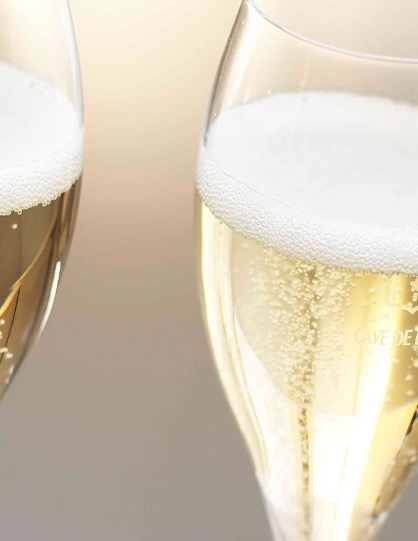
There is something intrinsically enchanting about champagne. Its delicate effervescence, golden hue, and celebratory pop have long made it the drink of choice for life's grandest moments. But beyond the sparkle lies a subtle art to serving champagne that can elevate any gathering from delightful to unforgettable. Whether you're hosting a black-tie soirée or an intimate dinner party, mastering the ritual of champagne service brings an air of sophistication and intention to your celebration.


Select the Right Champagne


Before the cork is ever loosened, elegance begins with selection. True champagne hails exclusively from the Champagne region of France, crafted from a blend of Chardonnay, Pinot Noir, and Meunier grapes. Each house offers its own expression—from the crisp minerality of a Blanc de Blancs to the richness of a vintage brut.


For celebratory toasts, a brut (dry) champagne is a versatile and widely appreciated choice. For aperitifs, consider a rosé champagne with its delicate fruit notes, while a vintage bottle lends gravitas to a formal dinner.


Remember: while sparkling wines from other regions (like prosecco or cava) can be delightful, the label “champagne” is reserved for the real thing.


Chill to Perfection


Champagne is best enjoyed chilled, ideally between 45°F and 50°F (7°C to 10°C). Too cold, and the nuances of flavor are muted; too warm, and the effervescence may become overpowering.


To chill properly:


  • Place the bottle in a bucket filled with equal parts ice and water for 20–30 minutes.


  • Alternatively, refrigerate for 3–4 hours. Avoid freezing, as this can dull the flavors and risk an explosive mess when opened.


Choose the Right Glassware
While coupes—the wide, shallow glasses made famous by the roaring twenties—have vintage appeal, flutes or tulip-shaped glasses are preferable for a modern and refined experience.
Flutes preserve the bubbles, allowing them to dance in tight, elegant streams. Tulip glasses, with their slightly wider bowl and tapering rim, strike the perfect balance between preserving effervescence and allowing aromas to gather.


 Open with Poise


The opening of a champagne bottle should be a quiet affair, not a loud pop. The goal is a gentle sigh—not a dramatic bang.


Here’s how:


  1. Remove the foil neatly.


  2. Keep a thumb on the cork while loosening the wire cage (six half-turns is the standard).


  3. Tilt the bottle at a 45-degree angle, pointing it away from yourself and others.


  4. Hold the cork firmly and twist the bottle (not the cork) slowly. Let the gas ease the cork out with a soft sigh.


A discreet opening is a mark of elegance and control. It’s a ritual worth mastering.


Pour with Grace


Hold the bottle at the base or by the punt (the dimple at the bottom). Pour a small amount into each glass first, letting the foam settle, then top up to two-thirds full. This avoids overflow and preserves the bubbles.


If you're serving a large group, pour for guests in a clockwise direction, always starting with the guest of honor.


Serve at the Right Moment


Champagne is both a prelude and a punctuation mark. It can welcome guests, accompany a toast, or elevate a moment at the table. It is not only a drink—it is an experience. Serve it thoughtfully:


  • As an aperitif before dinner


  • With light courses such as oysters, caviar, or sushi


  • With dessert (demi-sec champagnes pair beautifully with fruit-based sweets)


Keep a chilled bottle on standby, and always pour with attentive discretion, topping up glasses gently as needed.


To serve champagne is to offer more than just a beverage—it is to offer a moment. It signals thoughtfulness, joy, and celebration. And when done with care, it adds a whisper of ceremony that guests will remember long after the bubbles have faded.


In the end, elegance is not about extravagance—it’s about attention. To temperature. To timing. To detail. And above all, to the joy of sharing something beautiful.


So the next time the occasion calls for sparkle, serve your champagne not just with confidence, but with grace.


In the heart of France’s Champagne region, there is a street where history, elegance, and effervescence intertwine — a street unlike any other in the world. Welcome to the Avenue de Champagne in Épernay, often called "the most expensive avenue on Earth" — not because of luxury boutiques or fashion houses, but because of the priceless treasure resting quietly beneath its cobblestones: millions of bottles of champagne, aging to perfection in vast underground cellars.


A visit to Avenue de Champagne is a pilgrimage for lovers of wine, history, and French art de vivre. Here, the spirit of Champagne is not just tasted — it is lived.


A Walk Through History


The story of Avenue de Champagne is inseparable from the story of the beverage that made it famous. In the 18th and 19th centuries, as Champagne began its rise to global renown, Épernay quickly became a center of commerce, innovation, and prestige. Wine merchants and producers, seeking to impress both visitors and clients, established grand maisons along a single, splendid thoroughfare.


The avenue soon blossomed into an architectural showcase: stately 19th-century mansions, ornate wrought-iron gates, and manicured gardens, all symbols of the success and ambition of Champagne’s pioneering houses. Names like Moët & Chandon, Perrier-Jouët, Pol Roger, and Mercier grace the facades, echoing a heritage that spans centuries.


Yet what lies beneath is even more extraordinary. Beneath the Avenue de Champagne stretch more than 110 kilometers of chalk caves — a labyrinth of cool, dark tunnels where tens of millions of bottles patiently mature. These subterranean cathedrals, hand-carved over centuries, provide the ideal conditions for the slow, magical transformation that defines true Champagne.


A Journey of Taste and Discovery


Strolling along the Avenue today is a sensory and cultural journey. The maisons welcome visitors with a refined blend of tradition and modernity, offering immersive tours, tastings, and experiences that reveal the secrets behind the world’s most celebrated sparkling wine.


At Moët & Chandon, founded in 1743, you step into a world of grandeur. The tour plunges visitors into the vast underground cellars — the largest in the region — where some of Champagne’s most iconic bottles rest, including vintages destined for royal courts and glittering celebrations.


Nearby, Perrier-Jouët enchants with its Art Nouveau spirit. This house is known not only for its elegant, floral Champagnes but also for its artistic collaborations and exquisite Belle Époque cuvées, recognizable by their hand-painted anemone motifs.


At Pol Roger, the atmosphere is more intimate, yet equally rich in history. This was Winston Churchill’s Champagne house of choice, and visiting it feels like stepping into a world where tradition and understated excellence reign supreme.


The Spirit of the Avenue


Beyond the legendary houses, Avenue de Champagne exudes a spirit that is uniquely its own: a blend of sophistication and hospitality, history and living culture. The avenue is more than a monument to the past; it is a vibrant artery where celebrations are constant and creativity flows.


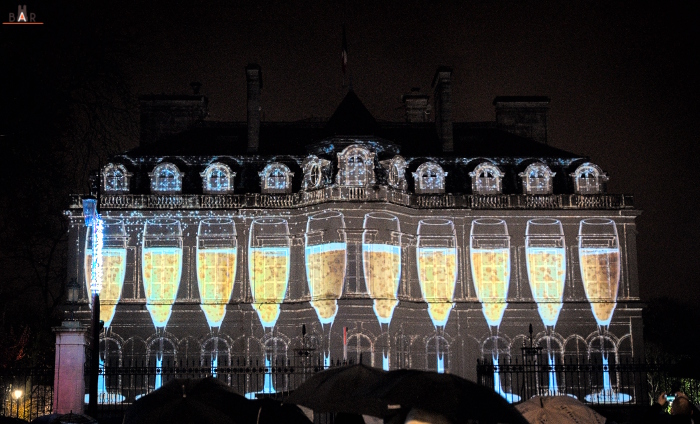
Throughout the year, events like Habits de Lumière transform the avenue into a spectacle of lights, music, gastronomy, and, of course, Champagne. For one magical weekend in December, the historic façades become canvases for dazzling illuminations, and Épernay buzzes with festivities, tastings, and parades — a luminous tribute to the joy that Champagne represents.


Boutique hotels and refined guesthouses have also found their place along or near the avenue, offering travelers the opportunity to wake each morning in the heart of Champagne’s beating soul. Fine dining, charming cafés, and gourmet shops complete the picture, inviting visitors to linger and savor every moment.


Practical Tips for Visitors


If you plan to explore the Avenue de Champagne, here are a few suggestions to enhance your journey:


  • Book in advance: Many of the maisons require or recommend advance reservations for tours and tastings, especially during peak seasons.


  • Mix the famous with the intimate: While visiting iconic houses is a must, take time to discover smaller producers and boutiques. Each brings a unique voice to the Champagne story.


  • Allow time to wander: The avenue itself, with its stunning architecture and serene atmosphere, rewards leisurely exploration.


  • Embrace the seasons: Each season casts its own charm on the avenue, from the soft blossoms of spring to the golden harvests of autumn and the sparkling magic of winter celebrations.


A Final Toast


The Avenue de Champagne is not just the grand showcase of Épernay; it is the living, breathing spirit of Champagne itself — a place where history and pleasure, tradition and innovation, earth and artistry meet in a perfect dance.


Tucked gracefully between the Seine and the Luxembourg Gardens, the Odéon neighborhood in Paris offers a glimpse of the city at its most effortlessly refined. Here, the Paris of novels, of whispered conversations in cafés, and of slow, purposeful strolls along tree-lined streets comes vividly to life.


Located within the 6th arrondissement, Odéon feels both lively and contemplative, a paradox the Parisians have perfected. Though it thrives at the crossroads of Saint-Germain-des-Prés and the Latin Quarter, Odéon asserts its distinct identity—an enclave where history, culture, and daily life weave together with uncommon grace.


A Heritage Etched in Stone


The Odéon neighborhood takes its name from the Théâtre de l'Odéon, an 18th-century marvel designed by architects Marie-Joseph Peyre and Charles De Wailly. Commissioned by Marie Antoinette herself, the theater opened in 1782 as a home for the Comédie-Française. It quickly became a stage not only for performances but also for the grand drama of French history: revolutionaries stormed its doors, Bonaparte once walked its halls, and playwrights tested their voices against the winds of political change.


Today, the Théâtre de l'Odéon remains a beacon of French theatrical tradition, its neoclassical façade presiding over the Place de l'Odéon with calm authority. The theater is more than an architectural landmark; it is the soul of the neighborhood, a reminder that in Paris, the arts are never peripheral—they are vital, essential.


Streets that Whisper Stories


Wandering through Odéon, one senses the weight of stories embedded in every stone. The rue de l'Odéon itself once hosted Sylvia Beach’s legendary Shakespeare and Company, the bookshop that first published James Joyce’s Ulysses when no one else dared. Nearby, Adrienne Monnier’s La Maison des Amis des Livres welcomed literary giants like André Gide, Paul Valéry, and Ernest Hemingway.


These streets were—and remain—a cradle for literary innovation. Although the original Shakespeare and Company has moved, the echoes of those heady years endure. New generations of readers and writers still find their way to Odéon, drawn by an invisible thread of creative energy.


One of the most enchanting aspects of Odéon is the way the past coexists effortlessly with the present. On any given afternoon, you might pass a polished brass plaque commemorating a 19th-century poet before stepping into a contemporary art gallery that feels almost secretive, tucked away behind ivy-covered walls.


Cafés: The Neighborhood’s Heartbeat


If the theater is the soul of Odéon, its cafés are the heartbeat. The neighborhood offers a rich tapestry of cafés, brasseries, and tea rooms where time seems to slow, inviting both idleness and intense conversation.


The Café de Flore and Les Deux Magots, a few minutes' walk away, are the better-known stars of Saint-Germain, but Odéon’s own establishments offer a more intimate allure. Le Danton, with its red velvet banquettes and Belle Époque mirrors, serves perfect café crèmes to students, artists, and discerning travelers alike. Closer to the theater, tiny cafés spill onto the cobblestones of the Place de l’Odéon, their chairs always turned outward, ready for the delicate art of people-watching.


There is a rhythm to the café culture here: a morning espresso shared quietly with a book, a leisurely lunch under a striped awning, an apéritif that stretches into early evening as the sky blushes pink. In Odéon, a café is not merely a place to eat or drink—it is a stage for life itself.


Hidden Gardens and Serene Corners


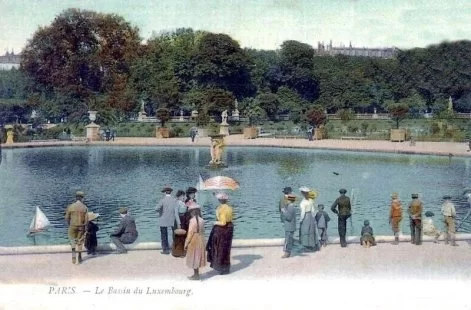
Despite its central location, Odéon offers pockets of rare tranquility. The proximity of the Jardin du Luxembourg is an obvious blessing: a five-minute walk is all it takes to find yourself among the grand fountains, manicured flowerbeds, and quiet statues of this regal park.


But Odéon has its own secret gardens, too. Tiny courtyards and shaded squares seem to appear out of nowhere: a vine-clad passage here, a secluded bench there. One such place is the Cour du Commerce Saint-André, a narrow alleyway that feels suspended in time. Here, beneath low-hanging lanterns, one finds some of the oldest surviving stones in Paris, including the site where Dr. Guillotin first demonstrated his infamous invention.


Every corner in Odéon promises a discovery—not loud or ostentatious, but quietly marvelous, like finding a hidden stanza in a familiar poem.


Shops of Character and Craft


Shopping in Odéon is a reminder that commerce, too, can be an art form. Forget the sprawling department stores of the Right Bank; here, boutiques are curated like private collections.


Booksellers offer rare editions behind creaking wooden doors. Artisans display hand-stitched leather goods and antique jewelry with the reverence of curators. There are bakeries where the scent of fresh brioche curls around you like an embrace, and chocolatiers whose windows are miniature masterpieces in cocoa and gold leaf.


Every purchase here feels personal, imbued with the spirit of craftsmanship and pride. To shop in Odéon is to participate in a tradition that values quality over quantity, authenticity over flash.


A Neighborhood for Dreamers


Above all, Odéon is a neighborhood that invites you to dream. Perhaps it is the way the light falls at a certain angle in the late afternoon, turning the limestone facades the color of honey. Perhaps it is the memories of poets and playwrights who once lived and loved here. Perhaps it is simply the enduring charm of a place that refuses to rush, to shout, or to dazzle cheaply.


Odéon does not perform for its visitors. It remains itself—quietly brilliant, gently stirring, infinitely Parisian. To walk its streets is to feel part of a larger, subtler story: the story of Paris not as spectacle, but as a living, breathing work of art.


Whether you find yourself lingering over a glass of wine at twilight, leafing through a novel in a centuries-old bookshop, or simply wandering without destination, Odéon will welcome you. And if you listen closely, it might even reveal some of its most carefully guarded secrets.


Paris is a symphony of grand boulevards, glittering monuments, and whispered secrets. For those who seek the quieter notes of this magnificent city, there is Passy — a neighborhood that moves at its own measured rhythm, far from the crowded avenues and hurried footsteps.
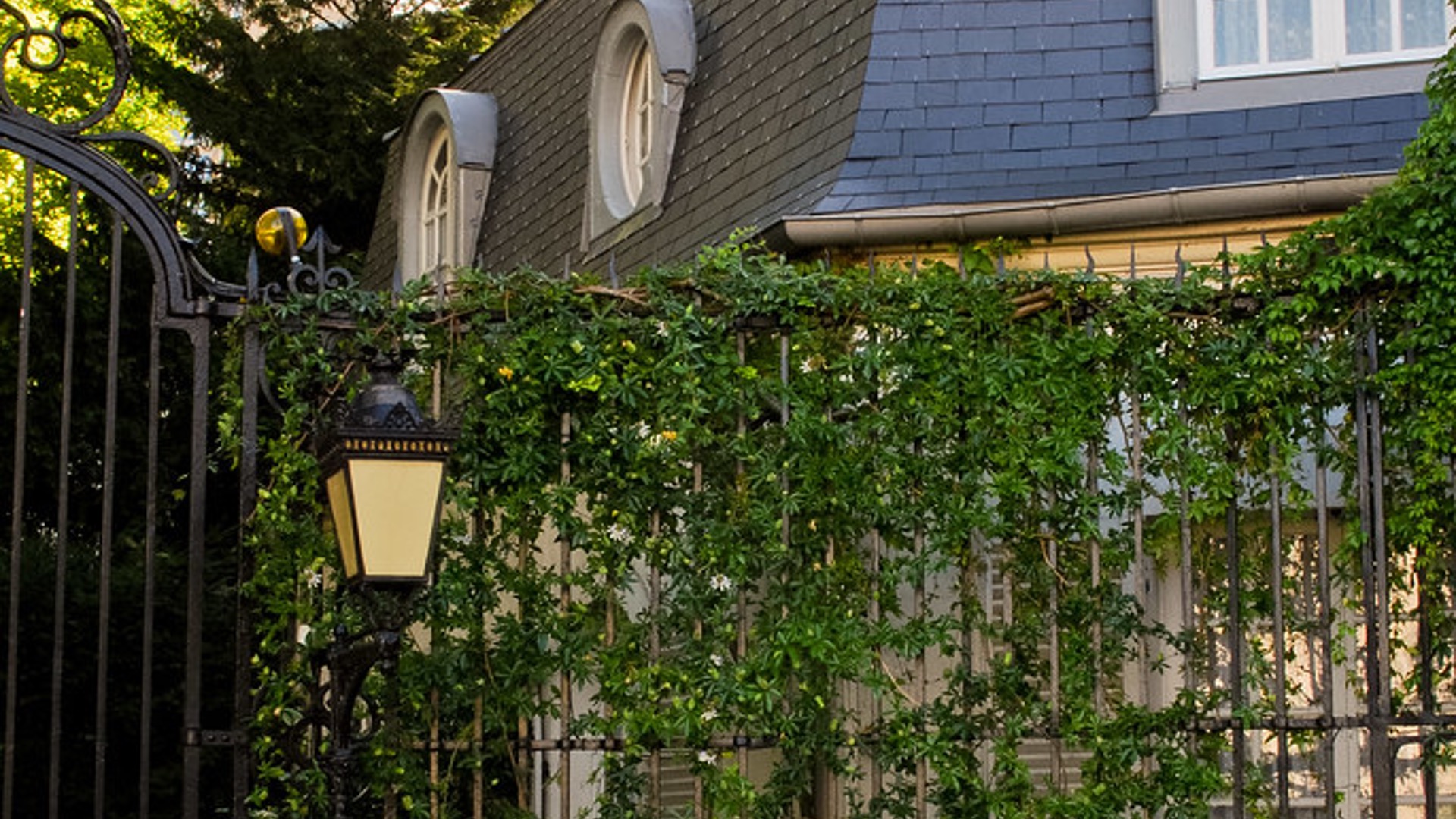
Nestled within the 16th arrondissement, Passy offers a vision of Paris that feels both intimate and timeless: a place where history and refinement blend seamlessly with everyday life.


To wander Passy is to discover a Paris of hidden gardens, discreet museums, and genteel charm — an experience meant not for the hurried tourist, but for the discerning traveler.


The Spirit of Passy: Elegance Without Excess


Passy was once a village outside the city limits, a retreat favored by aristocrats and artists seeking space and serenity. Absorbed into Paris in the 19th century, it retained its distinct character: leafy, elegant, and quietly self-assured.


Today, Passy’s streets remain lined with handsome Haussmannian buildings, ornate private mansions, and cobbled lanes that seem untouched by time. Yet its beauty is never ostentatious; it whispers rather than shouts, inviting those who appreciate subtlety and grace.


Artistic Treasures: Musée Marmottan Monet


A jewel within Passy’s crown is the Musée Marmottan Monet. Housed in a former hunting lodge, the museum feels like a secret kept from the city’s throngs.
Inside, you are treated to the world’s largest collection of works by Claude Monet, including the ethereal Impression, Sunrise, a painting that named an artistic revolution.


Beyond Monet, the collection unfolds into rooms filled with treasures by Morisot, Renoir, and Degas. The museum’s soft light, grand parquet floors, and intimate salons create an atmosphere where art is not simply displayed, but lived with.


Visiting the Marmottan is not a race through galleries; it is a lingering conversation with beauty.


Literary Echoes: Maison de Balzac


A short walk from the museum lies another testament to Passy’s cultural richness: the Maison de Balzac. Tucked discreetly at the end of a narrow street, this modest house was once the refuge of Honoré de Balzac, one of France’s greatest writers.


Here, within these simple walls, Balzac penned much of his monumental La Comédie Humaine, hiding from creditors while crafting portraits of Parisian society with unmatched precision.
Today, visitors can stroll through his study, view original manuscripts, and savor the sense of a mind at work. The garden, shaded and serene, offers a rare pocket of calm — with a gentle glimpse of the Eiffel Tower shimmering beyond the trees.


A Stroll Through Cimetière de Passy


Even in rest, Passy carries its air of quiet distinction.
The Cimetière de Passy, a walled cemetery behind the Trocadéro, holds the remains of many luminaries: Claude Debussy, Édouard Manet, Hubert de Givenchy, and aviation pioneer Roland Garros, to name a few.


Walking among the ornate tombs and family chapels, one feels not sorrow, but reverence. The cemetery’s setting — elegant, intimate, and blessed with a view of the Eiffel Tower — makes it a place of remembrance and reflection.
In Passy, even farewells are touched by grace.


Rue de Passy: A Taste of Parisian Life


No visit to Passy would be complete without a meander along Rue de Passy, the neighborhood’s vibrant artery. Here, the Parisian art of living is fully on display: smartly dressed locals browse boutiques, linger in cafés, and chat with bakers and florists.


Unlike the designer temples of the Champs-Élysées, shopping here feels personal and tasteful. You’ll find elegant French brands, artisanal shops, and gourmet delights — from exquisite patisseries to fine cheeses and hand-selected wines.


The Passy Plaza shopping center, discreetly tucked away, offers modern conveniences without sacrificing the neighborhood’s charm. Yet the true luxury of Rue de Passy lies in its authenticity: a living, breathing Paris that tourists rarely penetrate.


The Gardens of Trocadéro: A View Like No Other


At the eastern edge of Passy, the city opens up to one of its most spectacular vistas: the Jardins du Trocadéro.
Spread across a broad terrace opposite the Eiffel Tower, these formal gardens offer sweeping lawns, grand staircases, and fountains that seem to leap joyously toward the sky.


Come at dusk, when the sun gilds the tower and the fountains shimmer in the soft light, and you will understand why Passy holds the heart of those who know Paris best.
The crowds, though inevitable, somehow feel more bearable here, perhaps because the setting itself demands admiration, not haste.


A Toast to Tradition: Musée du Vin


Hidden near the Seine, in ancient limestone cellars once used by the monks of Passy, lies the Musée du Vin — a charming museum devoted to the history of wine.
Inside, vaulted tunnels hold centuries of viticultural tradition, from antique tools to dusty bottles. A visit concludes, fittingly, with a tasting, allowing you to savor the very essence of France’s terroir.


It is a reminder that in Passy, even the pleasures of the table are celebrated with thoughtfulness and respect.


Why Passy Captivates so much


Passy is not a neighborhood of spectacle; it is a neighborhood of refinement.
It asks you to slow your pace, to look more closely, to listen to the quieter stories woven into its streets and gardens. It offers not the Paris of postcards, but the Paris of poetry — understated, enduring, and profoundly beautiful.


To spend a day in Passy is to feel you have touched a part of Paris that many visitors miss. It is to walk in the footsteps of artists and aristocrats, to sip coffee beside a local, to stand quietly in a garden and watch the city breathe.


1 2 3 5